
CBSE Grade 6 Social Studies: Key Topics Explained
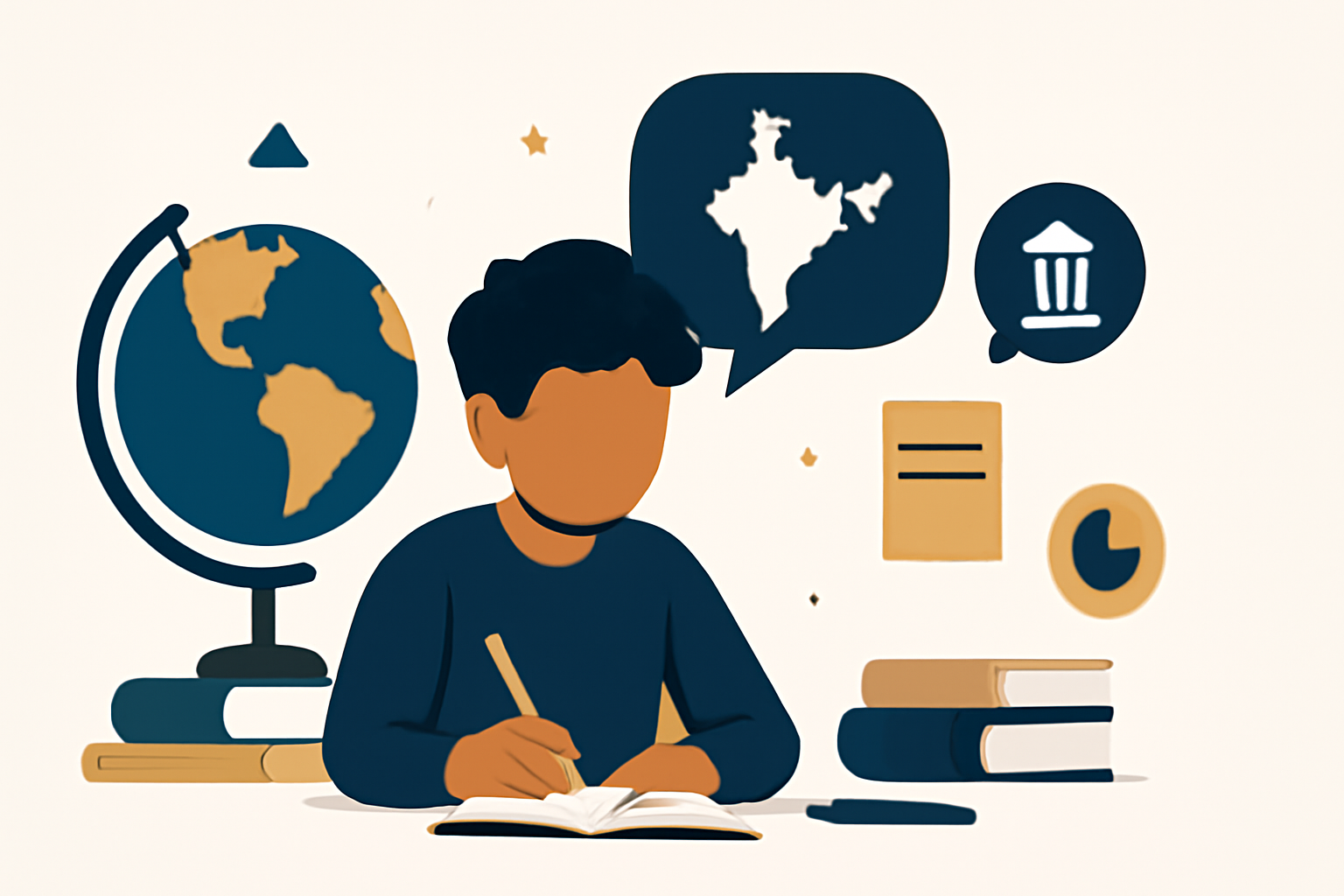
Understanding the Transition to Grade 6 Social Science
The move from Grade 5 to Grade 6 marks a pivotal moment in the Central Board of Secondary Education (CBSE) curriculum. During the primary years, young learners explore the world primarily through Environmental Studies (EVS), an integrated subject that blends general science with social concepts. In Grade 6, however, Social Science transforms into three distinct, structured disciplines: History, Geography, and Social and Political Life (Civics).
For many students, this shift introduces a noticeable increase in reading volume, specialised terminology, and analytical thinking. Instead of simply memorising facts, children are expected to connect historical timelines, interpret geographical models, and understand how human societies organise themselves. As parents, understanding the core themes of the CBSE Grade 6 Social Studies curriculum allows you to provide thoughtful encouragement and steady guidance at home.
History: Uncovering 'Our Pasts - I'
The Grade 6 History textbook, titled Our Pasts - I, takes students on a captivating journey from prehistoric human settlements to the rise of early kingdoms in ancient India. The curriculum aims to foster a sense of historical inquiry rather than mere memory recall.
Key Topics in History
- What, Where, How and When?: Introduces how historians and archaeologists study the past using artefacts, manuscripts, inscriptions, and coins.
- From Gathering to Growing Food: Examines the transition from nomadic hunter-gatherer lifestyles to settled agriculture and animal domestication.
- In the Earliest Cities: Focuses on the Harappan Civilisation, exploring urban planning, drainage systems, craft production, and daily life in ancient cities such as Mohenjo-daro and Lothal.
- Vedic Period and Early Republics: Covers the emergence of the Vedas, the development of janapadas and mahajanapadas, and the early forms of governance that laid the groundwork for Indian statecraft.
- Empires and Culture: Explores the Mauryan Empire under Emperor Ashoka, focusing on his policy of Dhamma, as well as ancient trade routes like the Silk Route and the movement of pilgrims.
To support your child in History, encourage them to view historical events as stories rather than isolated dates. Creating simple timelines together can help them visualise chronological sequences and grasp cause-and-effect relationships.
Geography: Exploring 'The Earth: Our Habitat'
Geography in Grade 6 shifts from local environments to a broader, planetary perspective. The prescribed textbook, The Earth: Our Habitat, blends physical geography with spatial mapping techniques.
Key Topics in Geography
- The Earth in the Solar System: Introduces celestial bodies, stars, planets, and the unique position of Earth in sustaining life.
- Globe: Latitudes and Longitudes: Teaches fundamental spatial concepts, including the Equator, tropics, Prime Meridian, and how time zones are calculated across the globe.
- Motions of the Earth: Explains rotation and revolution, detailing how these movements give rise to day and night, as well as the changing seasons.
- Maps: Builds essential map-reading skills, focusing on components such as distance, direction, and conventional symbols.
- Major Domains and Landforms: Examines the Earth's main spheres—lithosphere, hydrosphere, atmosphere, and biosphere—alongside major landforms like mountains, plateaus, and plains.
- Our Country - India: Provides a geographic overview of India's physical features, climate patterns, natural vegetation, and wildlife.
Geography is inherently visual. Practising with a physical globe or a world atlas can make concepts like latitude, longitude, and seasonal shifts far easier to grasp for a young learner.
Civics: Grasping 'Social and Political Life - I'
The Civics component, officially termed Social and Political Life - I, shifts away from traditional civil administration details to focus on real-world social dynamics, democracy, and community institutions.
Key Topics in Civics
- Understanding Diversity and Discrimination: Explores the rich cultural, linguistic, and religious diversity of society, while addressing the importance of empathy, inclusion, and equality.
- What is Government?: Defines the role of government, the necessity of laws, and the fundamental distinctions between democratic and non-democratic systems.
- Local Government and Administration: Breaks down the functioning of local self-governance, including the Panchayati Raj in rural areas and Municipal Corporations in urban centres.
- Livelihoods: Examines how people earn a living in both rural and urban settings, highlighting different economic activities and working conditions.
Discussing everyday news or local community initiatives during family meals is a fantastic way to bring Civics lessons to life, helping students see the direct relevance of what they study in class.
Effective Strategies to Support Your Child's Learning
Navigating three sub-disciplines requires structured study habits and active learning techniques. Here are a few practical strategies to help your child thrive:
- Utilise Visual Aids: Use flashcards for historical dates and vocabulary terms. For Geography, regularly review physical and political maps.
- Encourage Active Reading: Ask your child to summarise key sections in their own words after reading a chapter, rather than re-reading passively.
- Relate Concepts to Daily Life: For students residing in the GCC region or living abroad, comparing local civic practices or geographical landscapes with those in India can deepen their conceptual understanding.
- Establish a Consistent Study Routine: Breaking the syllabus into manageable weekly chunks prevents last-minute cramming before periodic tests and terminal examinations.
At Lumivo, our experienced tutors work closely with students to break down complex topics into engaging, digestible lessons, ensuring that foundational concepts in CBSE Grade 6 Social Studies are fully understood and retained.
Building Confidence for Academic Success
Mastering CBSE Grade 6 Social Studies is not merely about achieving high marks in examinations; it is about cultivating critical thinking, global awareness, and a thoughtful appreciation of history and society. With consistent support, effective study techniques, and tailored guidance, your child can approach this subject with genuine curiosity and confidence.
If you would like personalised guidance or structured academic support to help your child navigate their CBSE curriculum smoothly, please feel free to fill out the enquiry form on the Lumivo homepage.
Want personalised guidance for your child?
Talk to a Lumivo tutor about CBSE, ICSE, IB or Cambridge — LKG to Grade 12.
Contact Lumivo